

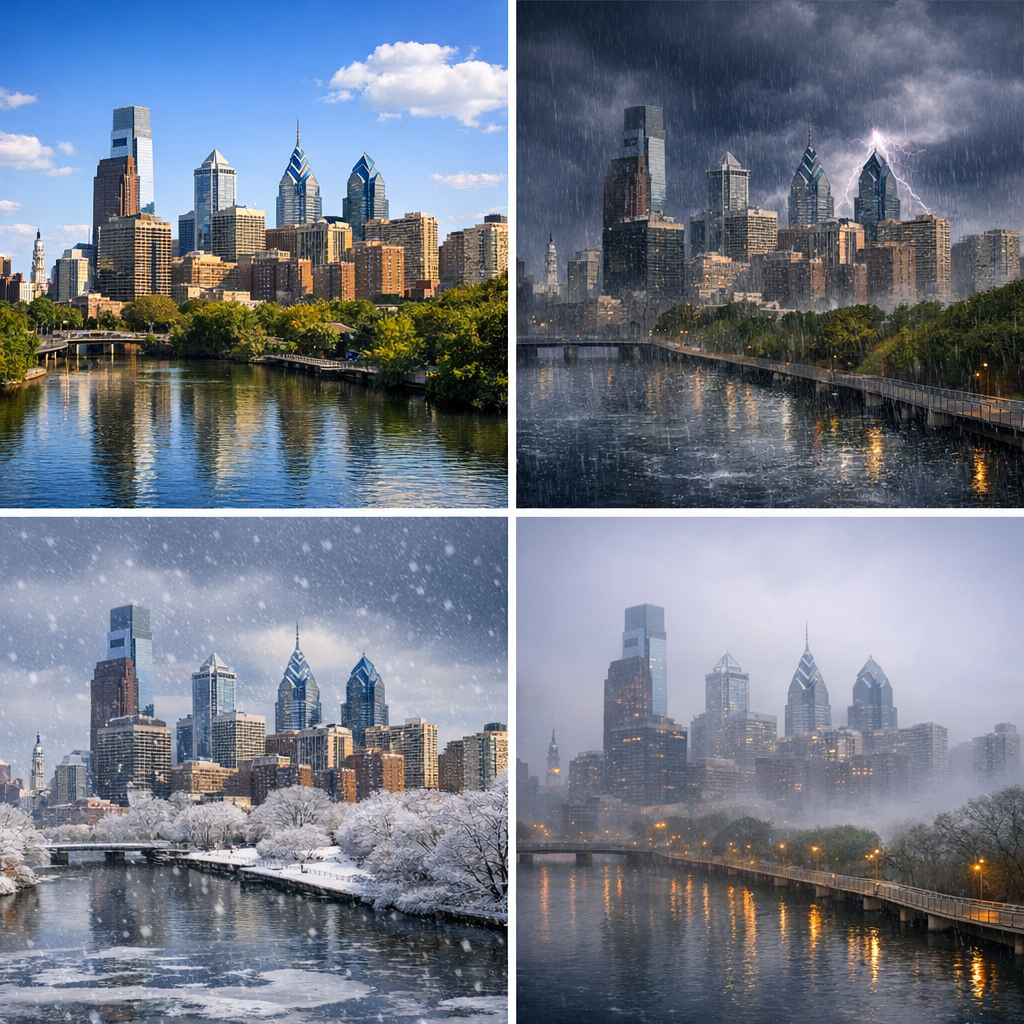
Philadelphia’s climate has been undergoing noticeable changes over the past several decades. As residents, it’s essential to understand these shifts, their implications, and how we can collectively respond.
Rising Temperatures
Data from the Philadelphia International Airport station indicates a significant warming trend. Between 1941 and 2025, the average temperature increased by approximately 1.77°C. This warming has led to more frequent and intense heatwaves, with the city now experiencing an average of 30 days per year with temperatures above 90°F, up from 21 days in the 1950s.
Shorter Cold Streaks
Conversely, cold weather streaks have become shorter. Since 1970, Philadelphia’s cold streaks have shortened by an average of 12 days. While extended cold snaps still occur, their duration and frequency have diminished, affecting activities that rely on prolonged cold periods.
Increased Precipitation and Storms
Climate projections suggest that Philadelphia will experience more rain and extreme storms. The Philadelphia Water Department anticipates challenges in managing water resources due to these changes, emphasizing the need for resilient infrastructure and adaptive strategies.
Impacts on Housing and Infrastructure
Recent analyses have highlighted that a significant portion of homes in the Philadelphia metro area are at major risk of wind disasters. Approximately $781 billion worth of properties are considered at risk, underscoring the importance of considering climate-related risks in real estate decisions.
Community Adaptation and Mitigation
Addressing these climate challenges requires a collective effort. The Philadelphia Water Department has initiated programs focused on both mitigation, such as reducing energy consumption, and adaptation, like enhancing infrastructure resilience. As residents, staying informed and participating in local sustainability initiatives can contribute to a more climate-resilient Philadelphia.
Understanding and responding to our changing climate is crucial. By staying informed and proactive, we can work together to ensure a sustainable and resilient future for our city.