

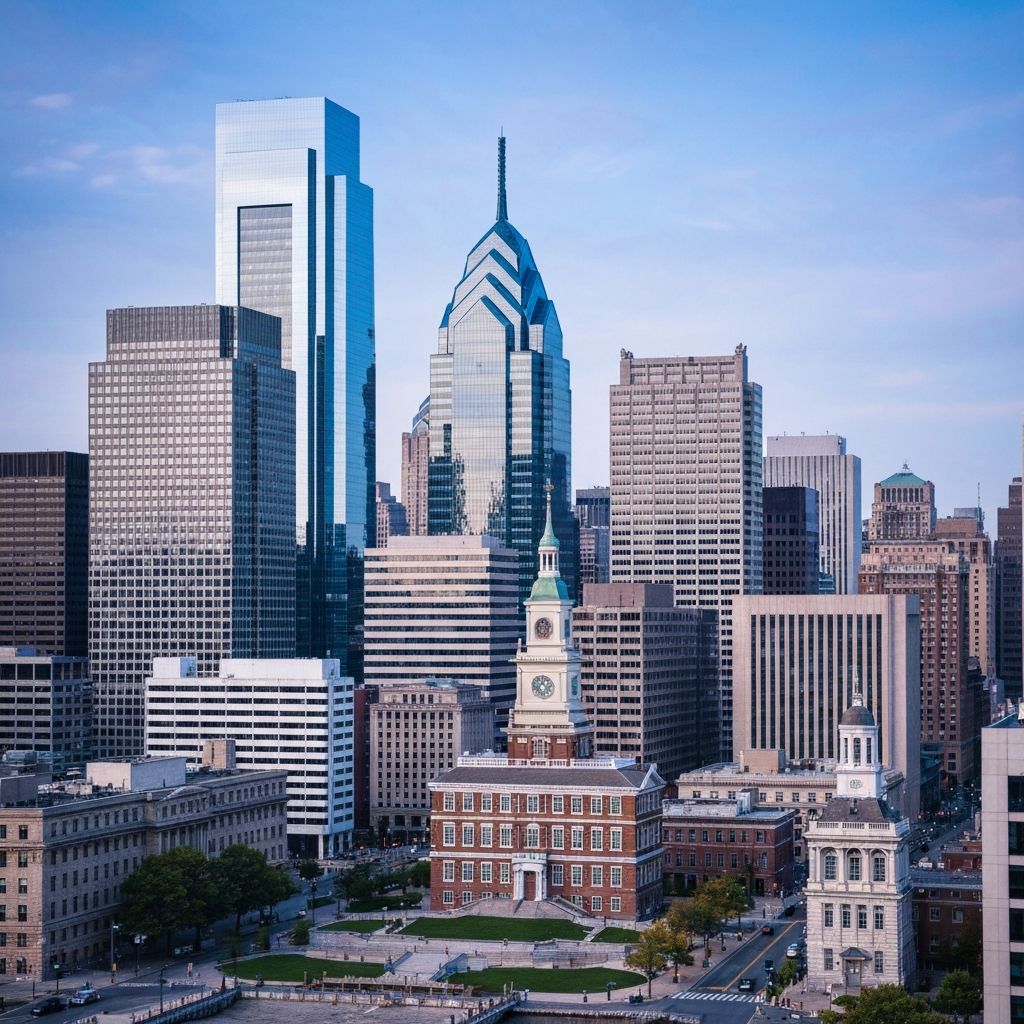
Philadelphia, historically known as the manufacturing capital of the nation, has undergone a significant economic transformation over the past several decades. This shift from a manufacturing-based economy to a service-oriented one has not only reshaped the city’s economic landscape but also positioned it as a pivotal player in the national economy.
A Shift from Manufacturing to Services
In the mid-20th century, manufacturing dominated Philadelphia’s economy, accounting for a substantial portion of employment. However, by the late 20th century, the city experienced a decline in its traditional industrial base, with manufacturing now representing only about ten percent of employment. This decline was accompanied by a rise in service industries, including financial services, healthcare, education, and information technology. Today, services, led by education and health care, dominate the economy. The leading employer in metropolitan Philadelphia is the University of Pennsylvania. Tourism has also grown increasingly valuable, with the city upgrading its visitor facilities, building hotels, the National Constitution Center, and a convention center among other projects. High-technology industries such as communications, computer software, and Internet commerce are also important.
Healthcare and Biotechnology: Pillars of Growth
The healthcare sector has emerged as a cornerstone of Philadelphia’s economy. The city is home to renowned institutions such as the University of Pennsylvania Health System and Thomas Jefferson University Hospital. These institutions not only provide employment to thousands but also contribute to medical research and innovation. Additionally, Philadelphia has become a biotechnology hub, earning the nickname “Cellicon Valley” for its central role in developing immunotherapies to treat various cancers.
Financial Services and Education: Economic Drivers
Philadelphia’s financial sector remains robust, with the city housing the nation’s oldest stock exchange, the Philadelphia Stock Exchange, now owned by Nasdaq. The presence of major financial institutions underscores the city’s significance in the national financial landscape. Moreover, with 17 four-year universities and colleges, including the University of Pennsylvania and Temple University, Philadelphia is a leading center for higher education and academic research. These institutions not only educate future professionals but also drive research and innovation, further bolstering the local and national economy.
Tourism: A Growing Economic Contributor
Philadelphia’s rich historical heritage attracts millions of tourists annually. Landmarks such as Independence Hall and the Liberty Bell, along with cultural institutions like the Philadelphia Museum of Art, contribute significantly to the local economy. The city’s efforts to promote tourism have led to increased visitor spending, benefiting local businesses and creating jobs in the hospitality sector.
Conclusion
Philadelphia’s economic evolution from a manufacturing powerhouse to a diverse, service-oriented economy reflects broader national trends. The city’s strategic focus on healthcare, biotechnology, education, and financial services has not only revitalized its local economy but also reinforced its role as a vital contributor to the national economic landscape. As Philadelphia continues to adapt and innovate, it stands as a testament to resilience and economic transformation.