

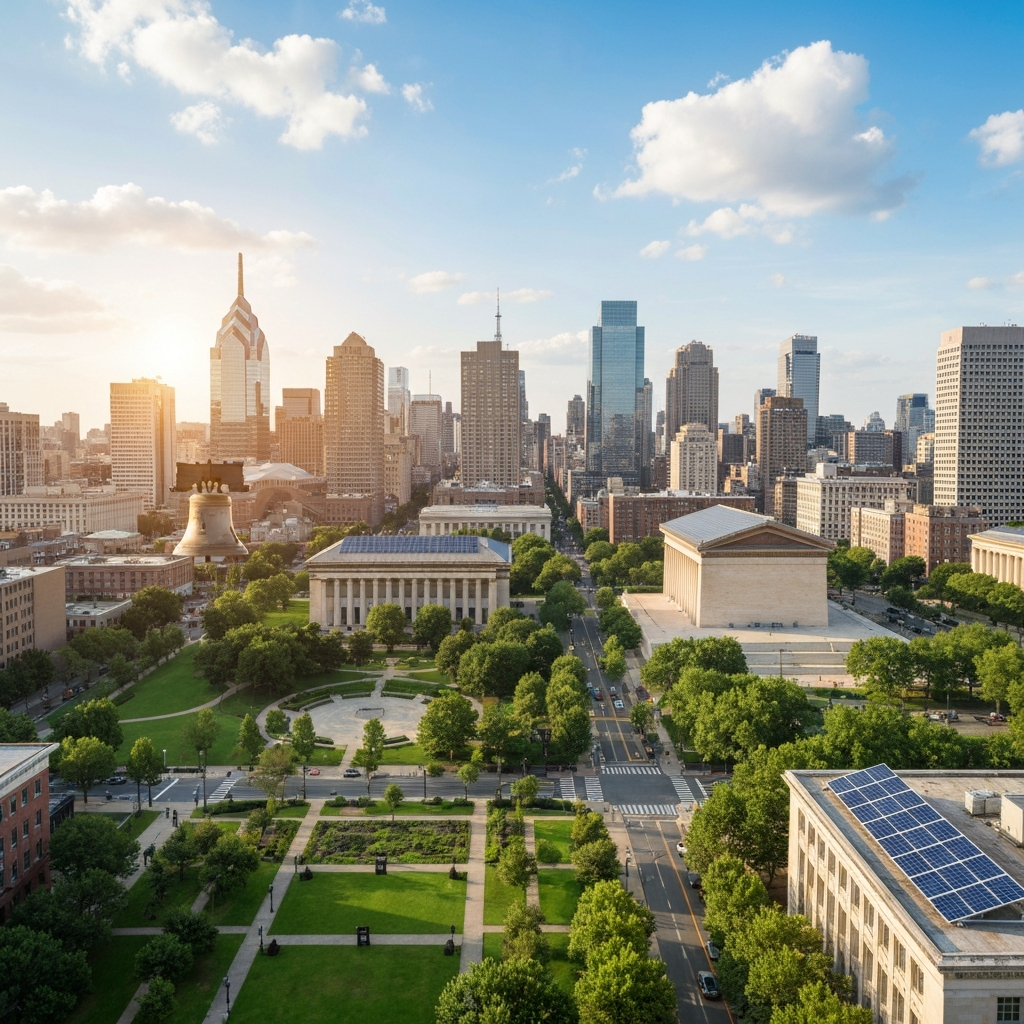
Philadelphia has been actively implementing strategies to address climate change and promote environmental sustainability. The city’s Office of Sustainability (OOS) has spearheaded numerous initiatives aimed at reducing carbon emissions, enhancing climate resilience, and advancing environmental justice.
Significant Achievements
One of the notable accomplishments is the Philadelphia Streetlight Improvement Project, which involves converting all city-operated streetlights to energy-efficient LED lights. As of May 2025, the project was over 80% complete and on track for completion by fall 2025. This initiative not only reduces energy consumption but also contributes to public safety, with studies indicating a 21% reduction in gun violence in areas where streetlights have been updated. Source
In the realm of renewable energy, the Adams Solar Project, launched in 2023, added 70 megawatts to the city’s renewable energy portfolio, increasing it to 30%. This project underscores Philadelphia’s commitment to transitioning to cleaner energy sources. Source
Additionally, the implementation of the Plastic Bag Ban in 2022 has led to the elimination of over 200 million plastic bags from distribution, significantly reducing litter and environmental pollution. Source
Ongoing Challenges
Despite these advancements, Philadelphia faces ongoing environmental challenges. The city received failing grades in all categories of air pollution in the American Lung Association’s annual “State of the Air” report. This places Philadelphia among only 20 counties in the U.S. to fail across the board, highlighting significant health risks associated with poor air quality. Source
Moreover, climate change has led to more intense rainfall in the region. Between 1970 and 2024, Philadelphia’s hourly rainfall intensity increased by 10.2%, resulting in more frequent and severe flash flooding and hazardous conditions. Source
Looking Ahead
To address these challenges, the OOS continues to develop and implement strategies focused on climate resilience and environmental justice. Initiatives like the Eastwick: From Recovery to Resilience program aim to co-develop flood resilience strategies with residents in flood-prone areas. Source
Furthermore, the city is investing in expanding its trail network, with plans for at least 91 miles of new trails. This expansion promotes outdoor recreation, enhances mental health, and provides safe, cost-free commuting alternatives, contributing to overall environmental sustainability. Source
Philadelphia’s commitment to environmental sustainability is evident in its proactive initiatives and ongoing efforts to address climate change. While challenges remain, the city’s progress serves as a foundation for future advancements in creating a healthier and more sustainable urban environment.