

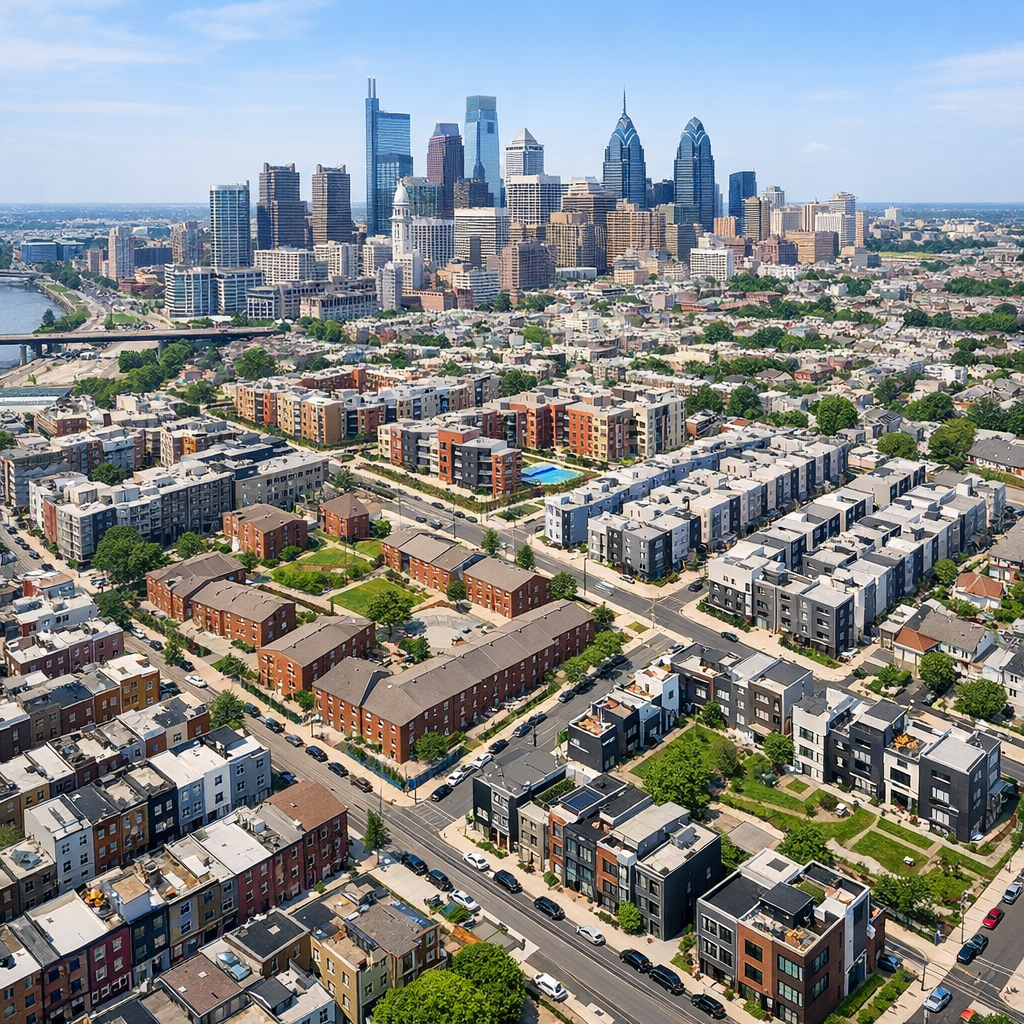
Philadelphia’s real estate market is experiencing notable shifts, with changes in inventory, pricing, and development projects shaping the landscape for buyers and sellers alike.
Market Trends and Inventory
Recent data indicates a cautious start to the spring housing market in Philadelphia. Home sales have slowed, yet a surge in for-sale listings has expanded buyers’ options. This increase in inventory has prompted some sellers to adjust their sale prices, potentially fueling more buying activity in the coming months. Despite this uptick, active listings remain 43% below pre-pandemic levels, highlighting the ongoing challenge of limited housing supply.
Pricing Dynamics
In March 2026, the median sale price of a home in Philadelphia was $275,000, reflecting a 0% change compared to the previous year. Homes are selling after an average of 61 days on the market, slightly longer than the 55 days observed last year. This stability in pricing, coupled with extended market times, suggests a market finding its equilibrium.
Development Initiatives
To address housing affordability and availability, several development projects are underway:
H.O.M.E. Initiative
Mayor Cherelle L. Parker’s Housing Opportunities Made Easy (H.O.M.E.) Initiative aims to invest $2 billion to build, preserve, and restore 30,000 housing units in Philadelphia. This ambitious plan seeks to ensure that every Philadelphian has access to quality housing.
Westpark Redevelopment
The Westpark Redevelopment project in West Philadelphia is set to transform a vacant public housing site into a mixed-income community. Phase 1 includes 327 new homes, with nearly 140 units reserved for returning residents and a total of 190 units designated as affordable housing. The project is expected to be completed by 2028.
Diamond Street Affordable Housing Project
In North Philadelphia’s Strawberry Mansion neighborhood, the Diamond Street Affordable Housing Project will deliver a 49,745-square-foot building consisting of 46 units of long-term affordable workforce housing. This development addresses the critical housing shortage in the area and is supported by a $2.7 million equity investment from the 481 CEI-Boulos Impact Fund.
Conclusion
Philadelphia’s real estate market is in a state of flux, with increased inventory and stable pricing offering opportunities for buyers, while development initiatives aim to enhance housing accessibility. Staying informed about these trends is essential for navigating the evolving landscape of the city’s housing market.