

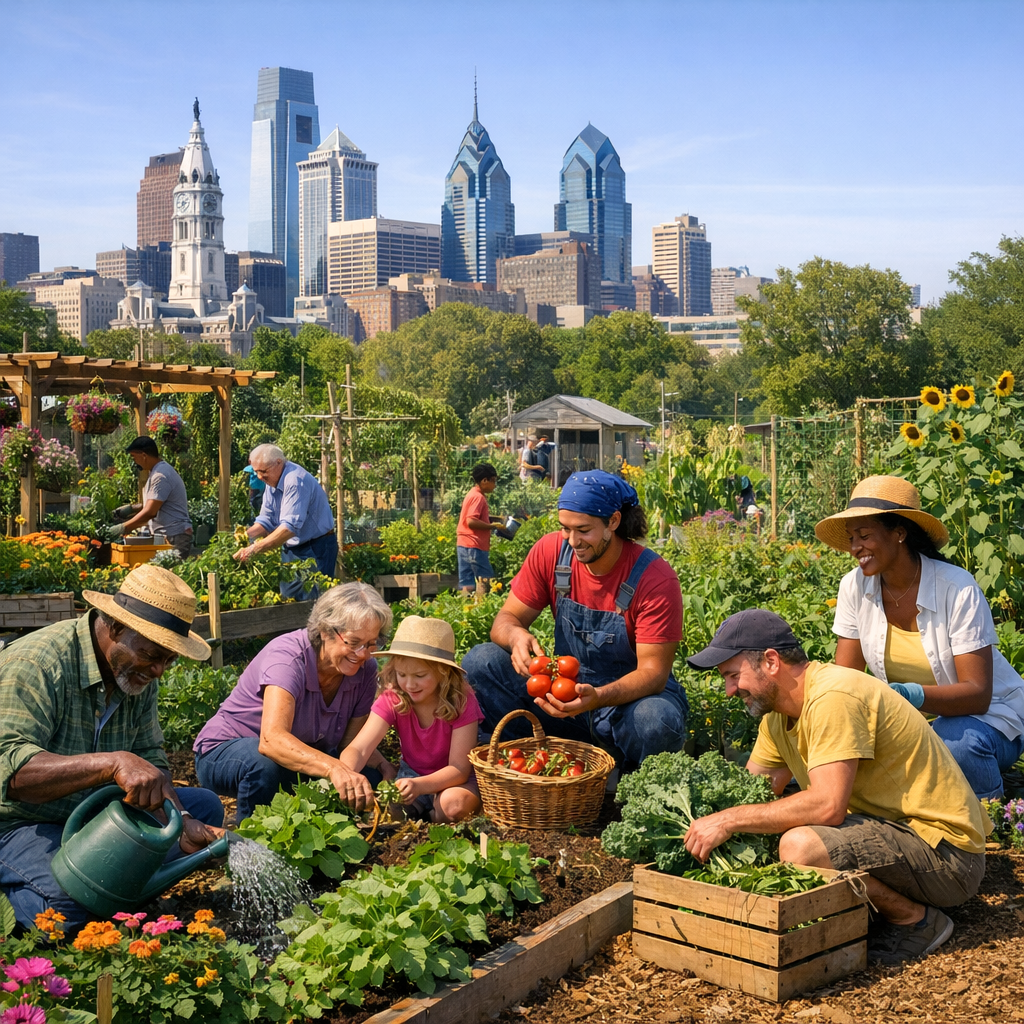
In the heart of Philadelphia, community gardens have blossomed into vital spaces that foster unity, provide fresh produce, and enhance urban green spaces. These gardens, scattered across the city, serve as hubs where residents come together to cultivate not only plants but also relationships and a sense of belonging.
The Growth of Community Gardens
Philadelphia boasts a rich tapestry of community gardens, each with its unique history and impact. For instance, the Schuylkill River Park Community Garden, established in the early 1980s, transformed a former industrial site into a thriving green space. Today, it comprises approximately 70 plots where residents grow a variety of plants, contributing to the neighborhood’s vibrancy.
Similarly, the Summer Winter Community Garden in Powelton Village, one of the city’s oldest, has been a sanctuary for gardeners since its inception. Managed entirely by volunteers, it not only provides sustenance but also serves as a serene retreat within the urban landscape.
Community Impact and Initiatives
Beyond individual plots, these gardens often engage in initiatives that benefit the broader community. Many participate in programs like the Pennsylvania Horticultural Society’s City Harvest, which supports community gardens with resources to donate produce to Philadelphians in need. This initiative underscores the gardens’ role in addressing food insecurity and promoting healthy eating habits.
Moreover, gardens like the Sankofa Community Farm at Bartram’s Garden host educational programs, workshops, and volunteer opportunities, fostering environmental stewardship and agricultural education among residents of all ages.
Challenges and Preservation Efforts
Despite their benefits, community gardens face challenges, including threats from urban development and the need for sustainable management. The Bodine Street Community Garden, for example, faced potential destruction in 2003 but was preserved through community advocacy and is now protected by the Neighborhood Gardens Association land trust.
Such efforts highlight the importance of community involvement in preserving these green spaces. They serve as reminders that, with collective action, urban gardens can continue to thrive and serve future generations.
Getting Involved
For those interested in joining or supporting a community garden, numerous opportunities exist. Many gardens welcome new members, volunteers, and donations. Engaging with these spaces not only provides access to fresh produce but also offers a chance to connect with neighbors and contribute to the community’s well-being.
In conclusion, Philadelphia’s community gardens are more than just plots of land; they are vibrant ecosystems that nurture plants, people, and the community spirit. Their continued growth and preservation are essential to maintaining the city’s green legacy and fostering a sense of unity among its residents.