

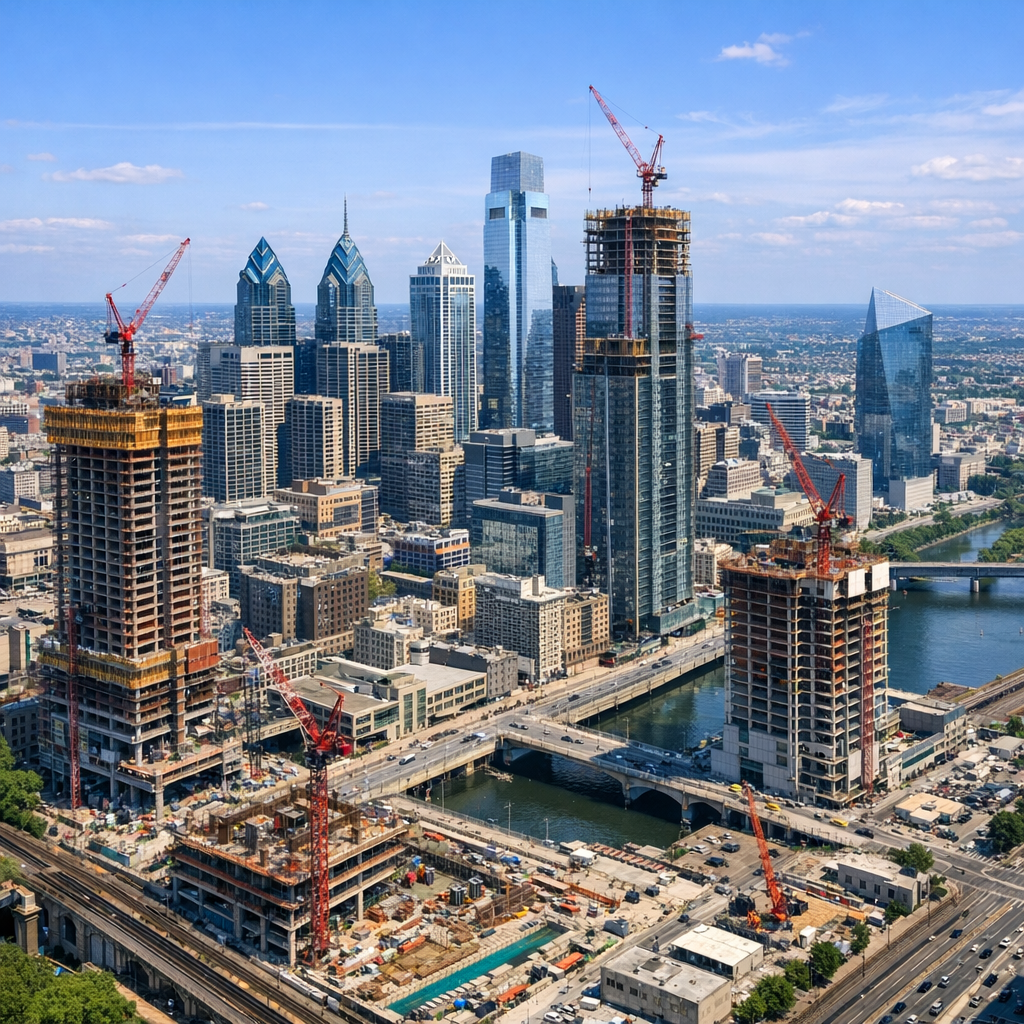
Philadelphia’s real estate market is experiencing notable shifts, with changes in inventory, pricing, and development projects shaping the housing landscape.
Market Trends
Recent data indicates a tightening in the housing market. In February, active listings decreased by 2.3% year-over-year, with only 1,446 new homes entering the market—a 12.6% drop from the previous year. This reduction in supply has led to increased competition among buyers. The median list price stood at $265,000, a slight 1.4% decrease from the previous year, yet still approximately $138,000 below the national median, maintaining Philadelphia’s affordability advantage. Homes are spending an average of 69 days on the market, closely aligning with national trends.
Development Initiatives
To address housing challenges, several significant development projects are underway:
H.O.M.E. Initiative
Mayor Cherelle L. Parker’s Housing Opportunities Made Easy (H.O.M.E.) Initiative aims to invest $2 billion over four years to create and preserve 30,000 housing units. This plan focuses on building cross-sector partnerships to ensure every Philadelphian has access to quality housing.
Brith Sholom Apartments Redevelopment
A $50 million investment by the Philadelphia Building and Construction Trades Council is set to redevelop the Brith Sholom Apartments in Wynnefield. This project will provide 336 affordable senior apartments and generate 545 union construction jobs, marking a significant step in affordable housing development.
Diamond Street Affordable Housing Project
In the Strawberry Mansion neighborhood, the Diamond Street Affordable Housing Project has broken ground. This development will offer 46 units of long-term affordable housing, addressing the critical shortage in the area and emphasizing sustainability and community support.
Westpark Redevelopment
The Westpark Redevelopment project in West Philadelphia is transforming a vacant public housing site into a mixed-income community. Phase 1 includes 327 new homes, with nearly 140 units reserved for returning residents and a total of 190 units designated as affordable housing. The project also features significant infrastructure improvements and green spaces.
Conclusion
Philadelphia’s real estate market is characterized by a tightening inventory and strategic development initiatives aimed at enhancing housing accessibility. Prospective buyers and renters should stay informed about these trends and developments to navigate the evolving landscape effectively.