

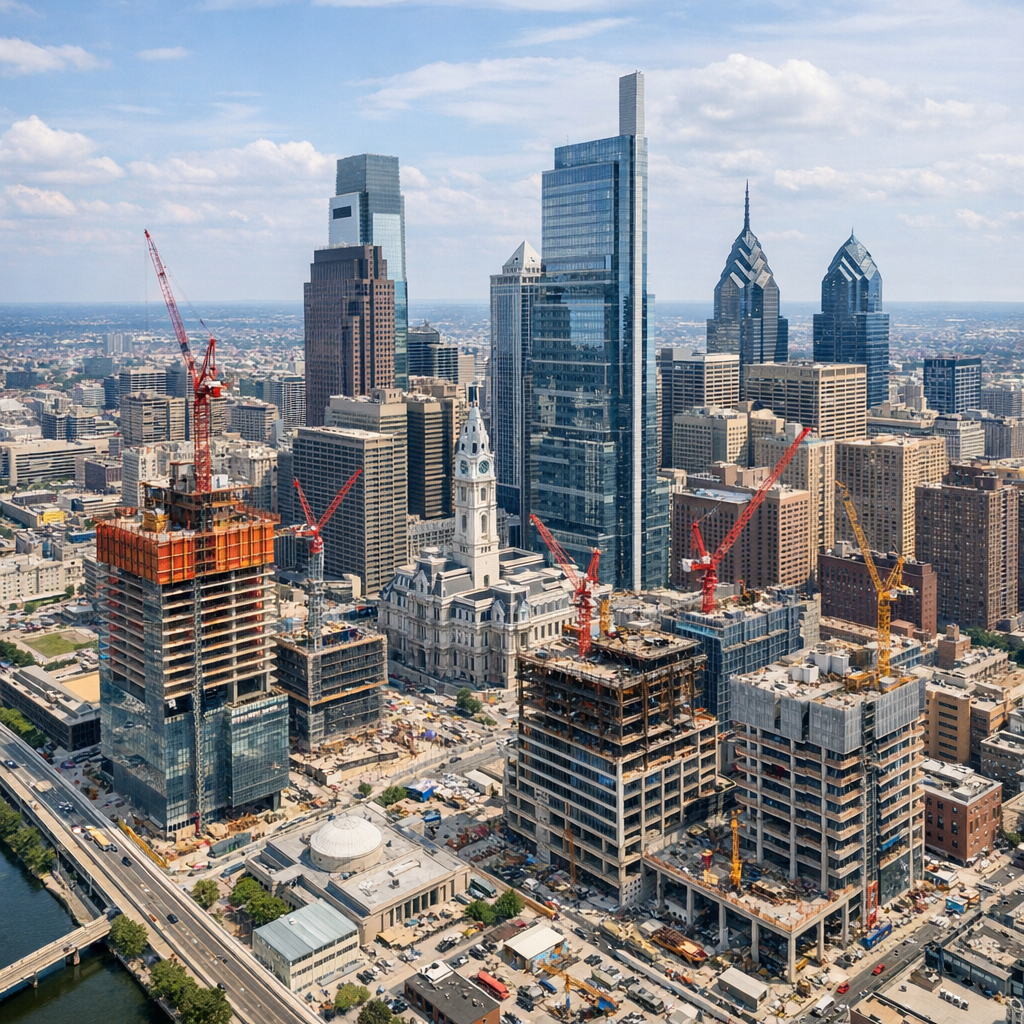
Philadelphia’s real estate market is experiencing significant transformations, influenced by inventory fluctuations, pricing trends, and ambitious development initiatives.
Market Inventory and Pricing Trends
Recent data indicates a tightening of the housing market. In February, active listings decreased by 2.3% year-over-year to 3,830, while new listings saw a sharp 12.6% decline compared to the previous year. This reduction in available homes has contributed to sustained competition among buyers.
Despite the limited inventory, home prices have remained relatively stable. The median sale price in March was $275,000, showing no significant change from the previous year. However, homes are spending more time on the market, averaging 61 days before sale, up from 55 days the prior year.
Development Initiatives and Affordable Housing
To address housing challenges, several development projects are underway:
- H.O.M.E. Initiative: Launched by Mayor Cherelle L. Parker, this $2 billion plan aims to build, restore, and preserve 30,000 housing units over four years, focusing on affordability and accessibility.
- Brith Sholom Apartments Redevelopment: A $50 million investment by the Philadelphia Building and Construction Trades Council will transform this Wynnefield property into 336 affordable senior apartments, creating 545 union construction jobs.
- Westpark Redevelopment: In West Philadelphia, a public-private partnership is developing 327 mixed-income homes, with nearly 140 units reserved for returning residents and 190 units designated as affordable housing.
Homeownership and Rental Market Dynamics
Homeownership tenure in Philadelphia has increased, with residents staying in their homes for an average of 9.5 years, contributing to limited housing availability. Additionally, the cost gap between renting and owning has widened, with owning a home being 40% more expensive than renting. This disparity is influenced by high housing costs, limited affordable home supply, and declining homeownership rates.
In response, developers are focusing on luxury rental properties to meet demand from residents postponing home purchases due to high prices and mortgage rates. The median rent in Philadelphia stands at $1,547, surpassing the national average.
Conclusion
Philadelphia’s real estate market is characterized by limited inventory, stable yet competitive pricing, and proactive development efforts aimed at enhancing housing accessibility. Prospective buyers and renters should stay informed about these evolving trends to make well-informed decisions in this dynamic market.