

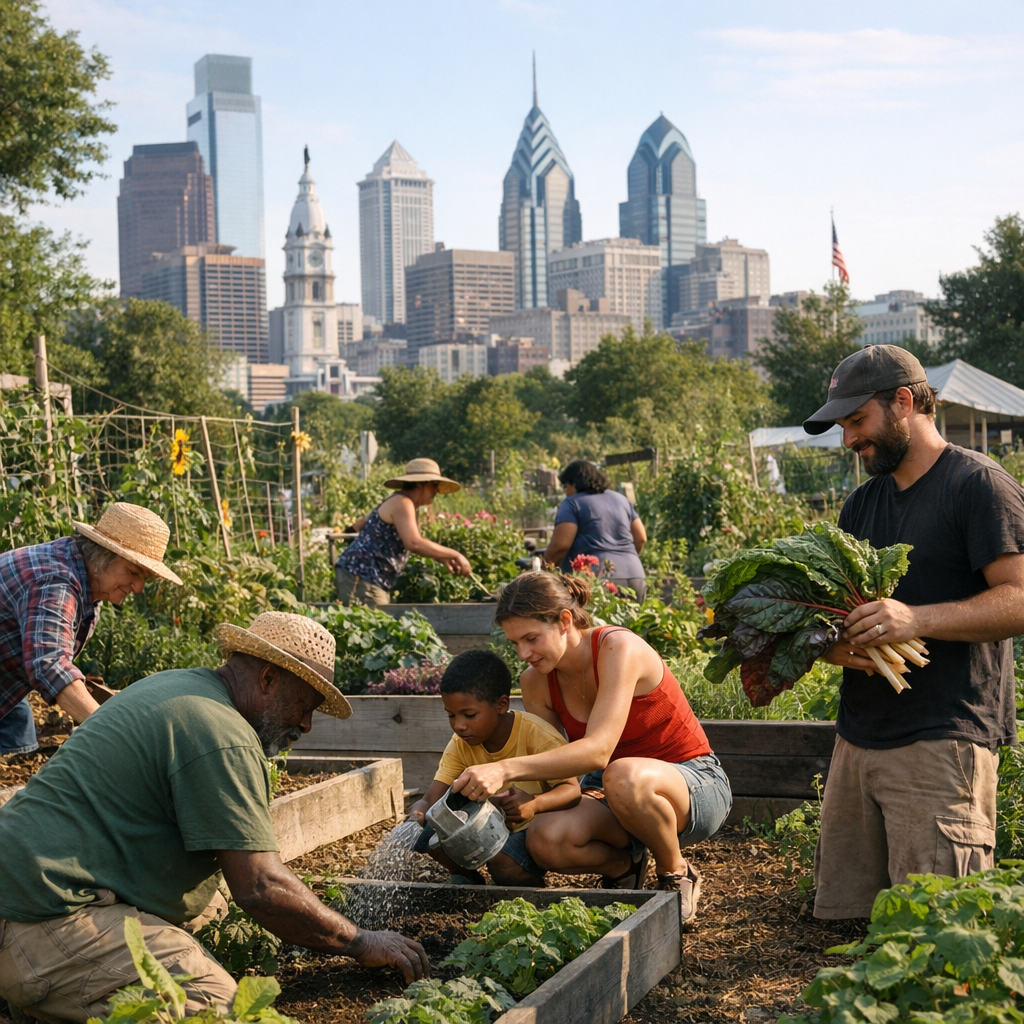
Philadelphia’s community gardens are more than just plots of land for growing vegetables and flowers; they are vibrant hubs that foster unity, sustainability, and local engagement. These green spaces offer residents a chance to connect with nature, learn about gardening, and build relationships with neighbors.
Historical Roots and Growth
The tradition of community gardening in Philadelphia dates back several decades. For instance, the Schuylkill River Park Community Garden, established in 1982, transformed a former brickyard and railroad siding into a flourishing garden space. Today, it boasts around 70 plots managed by local residents. Similarly, the Summer Winter Community Garden in Powelton Village, one of the city’s oldest, continues to provide sustenance and beauty to its members.
Diverse Spaces Across the City
From the expansive Benjamin Rush Community Garden in the Northeast, covering over 11 acres, to the intimate Bodine Street Community Garden in South Queen Village, these spaces cater to diverse communities. The Awbury Community Garden in Germantown, established in 1977, not only offers gardening plots but also donates substantial quantities of food to local initiatives.
Community Impact and Engagement
Beyond providing fresh produce, these gardens serve as educational platforms. Programs like FarmPhilly’s Community Gardens Network support urban farming projects, offering resources such as compost, workshops, and technical assistance. Additionally, initiatives like the Junior Farmers program teach young people the benefits of growing and eating their own food, fostering a connection to the environment from an early age.
Challenges and Resilience
While these gardens offer numerous benefits, they also face challenges. Urban development pressures, resource limitations, and the need for continuous community involvement require ongoing dedication. However, the resilience of these spaces is evident. For example, the Bodine Street Community Garden overcame the threat of destruction in 2003 and, after a four-year struggle, secured its place as a protected urban green space.
Looking Ahead
As Philadelphia continues to evolve, the role of community gardens remains crucial. They not only provide fresh produce but also serve as sanctuaries for residents, promoting mental well-being and community cohesion. Supporting these gardens through volunteering, donations, or simply participating in their events can ensure they thrive for generations to come.
In a bustling urban environment, these green spaces remind us of the importance of community, sustainability, and the simple joy of tending to the earth.